Food packaging has become an important part of how restaurants, cafés, and takeaway businesses communicate their identity. Customers notice more than the food itself; they also appreciate thoughtful presentation, convenient wrapping, and attractive packaging. A neatly wrapped sandwich or carefully presented bakery item can make an everyday purchase feel more professional and memorable.
For food establishments, choosing suitable wrapping materials involves balancing practical performance with visual appeal. Packaging should accommodate different food portions, support efficient preparation, and reflect the personality of the business. Personalized designs offer opportunities to incorporate recognizable logos, signature colours, and creative patterns into daily food service.
When searching for custom deli paper near me, businesses should consider more than supplier location alone. Material quality, printing options, available dimensions, order quantities, and delivery arrangements are equally important. Choosing the right packaging solution helps establishments maintain a consistent presentation while supporting their everyday operational needs.
Why Personalized Deli Paper Matters for Food Businesses
Packaging is one of the first details customers notice when receiving a freshly prepared meal.
A neatly wrapped burger, sandwich, or bakery product can create a positive impression before the customer begins eating.
Personalized wrapping introduces recognizable branding directly into this experience.
A contemporary sandwich shop might prefer bold graphics, while a traditional delicatessen could choose understated artwork and classic typography.
These visual elements help distinguish products from those presented in generic packaging.
Consistent wrapping can also complement takeaway bags, food trays, and serving containers, creating a coordinated appearance across different menu categories.
Although attractive packaging cannot replace food quality or reliable service, it can strengthen the overall customer experience.
What to Look for When Choosing a Packaging Supplier
Finding a suitable packaging provider requires evaluating several practical factors.
Businesses should begin by reviewing available paper grades, printing capabilities, minimum order quantities, and customization options.
A supplier offering appropriate dimensions and clear artwork requirements can make the ordering process more straightforward.
Production schedules and delivery arrangements are also important, especially for establishments that rely on consistent packaging supplies.
Before committing to a large order, businesses should consider requesting samples to evaluate the material and finished printing.
Useful questions to ask include:
- What paper sizes and thicknesses are available?
- Can the supplier accommodate custom artwork?
- Are physical or digital proofs provided?
- What are the minimum order requirements?
- Which food-contact applications are supported?
- What production and delivery arrangements apply?
Comparing these details helps businesses select packaging based on actual operational requirements rather than price alone.
Creative Printing Ideas That Make Food Packaging Stand Out
Personalized wrapping provides an opportunity to communicate brand identity through everyday food presentation.
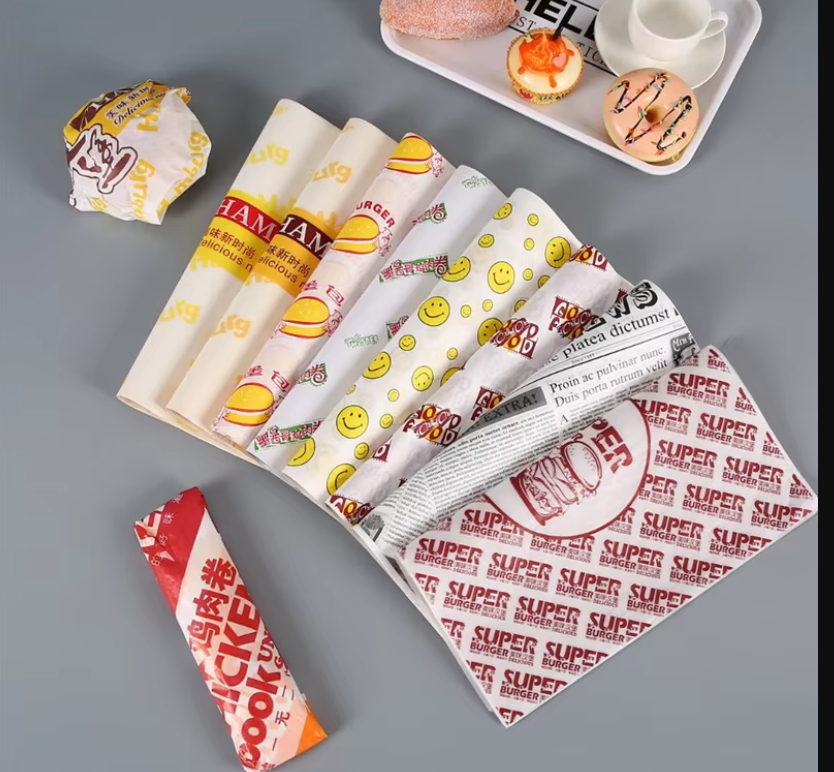
Logos, decorative illustrations, signature colours, and recognizable typography can transform ordinary paper into an attractive packaging element.
The most effective artwork should complement the establishment’s personality without overwhelming the food itself.
Minimalist designs featuring small repeating logos can create a clean appearance, while colourful patterns may suit contemporary takeaway brands.
Restaurants can also introduce seasonal artwork for promotional campaigns, holidays, and limited-edition menu collections.
Artwork placement deserves careful consideration because wrapping is frequently folded around products.
Repeating patterns can maintain visibility even when portions of the material become concealed.
Reviewing proofs and physical samples before production helps evaluate print clarity, colour combinations, and the overall finished appearance.
Selecting Suitable Materials for Different Food Products
Material selection influences both the appearance and practical performance of deli wrapping.
Different paper products may vary in thickness, flexibility, texture, surface treatment, and resistance characteristics.
These differences affect how the material performs during folding, handling, and food presentation.
Businesses should evaluate their menu requirements before choosing a particular grade.
For example, relatively dry bakery products may have different packaging needs from sandwiches containing sauces, moisture, or substantial amounts of oil.
The finished printed material, including its inks and coatings, should be suitable for the intended food-contact conditions.
Printed wrapping should not automatically be assumed appropriate for ovens, microwaves, or other heated applications.
Environmental claims should also be verified rather than assumed, as coatings and other treatments can influence recyclability and compostability.
Requesting material specifications helps establishments make informed purchasing decisions.
Choosing Practical Paper Sizes for Daily Operations
Paper dimensions can influence preparation speed, packaging consistency, and overall material consumption.
A sheet that is too small may provide insufficient coverage, while unnecessarily large wrapping can create excessive folds.
Businesses should evaluate their most frequently packaged products before selecting standard dimensions.
Pre-cut sheets may be convenient for establishments serving products in consistent sizes.
Roll-format wrapping can provide additional flexibility when different lengths are required throughout the day.
Testing samples with actual menu items allows employees to assess coverage, folding performance, and handling convenience.
Organizing packaging supplies near preparation stations can further simplify daily operations.
Maintaining appropriate inventory levels also helps reduce the risk of shortages during busy service periods.
Practical packaging choices support efficient preparation while maintaining an attractive presentation.
Building Stronger Customer Recognition Through Consistent Branding
Recognizable branding develops through repeated exposure to familiar visual elements.
When customers encounter the same logos, colours, and decorative patterns across different packaging products, they can more easily associate those materials with a particular establishment.
Personalized deli wrapping can complement takeaway bags, sandwich boxes, food trays, and other branded accessories.
This consistency is particularly valuable for businesses offering dine-in, takeaway, and delivery services.
Attractive packaging may also appear in customer photographs and social media posts, creating additional opportunities for brand visibility.
Businesses can introduce limited-edition designs for special events while retaining their established identity.
A carefully coordinated presentation helps create a professional and memorable customer experience across different purchasing situations.
Exploring Complementary Food Wrapping Solutions
A complete food packaging collection often requires several materials to accommodate different products and preparation methods.
Restaurants, bakeries, and cafés may use deli wrapping, serving liners, takeaway containers, food bags, and other protective materials throughout their daily operations.
Incorporating Custom printed greaseproof paper alongside suitable deli wrapping can provide additional options for coordinated food presentation and packaging applications.
Maintaining consistent logos, typography, and colours across these materials helps establish a recognizable visual identity.
However, different wrapping products should be evaluated according to their individual specifications rather than assumed to perform identically.
Businesses should compare food-contact suitability, resistance characteristics, available dimensions, and printing requirements before selecting complementary materials.
Requesting samples can also help evaluate compatibility with existing packaging and menu products.
A coordinated purchasing strategy supports attractive presentation while simplifying everyday packaging decisions.
Conclusion
Personalized deli wrapping offers restaurants, cafés, bakeries, and takeaway establishments an opportunity to strengthen their branding while improving everyday food presentation.
By choosing suitable materials, practical dimensions, and attractive printed artwork, businesses can create packaging that complements their products and supports efficient daily operations.
Evaluating supplier capabilities, reviewing samples, and planning inventory carefully can further improve the purchasing process.
With thoughtful design and attention to quality, customized deli paper can become a valuable part of a professional and memorable food packaging strategy.