Open a pair of sneakers that’s been sitting in a bad box for a few months, and you can usually tell right away. The toe box has a soft dent. The leather has a crease across the vamp that wasn’t there in the store. One shoe leans slightly toward the other, like they’ve been arguing.
None of that came from wearing them. It came from storage. And a lot of it traces back to something most people never think about: how the box itself was built.
Why Shoes Lose Their Shape in the First Place
Footwear looks tough, but plenty of it is surprisingly soft. Leather, suede, canvas, knit uppers, and even some synthetic materials hold their form only as long as nothing is pushing on them unevenly.
A few things quietly work against that:
- Weight from above. Stack a few boxes on top of each other, and the bottom one carries the weight of them all. A weak box gives, and the shoe inside takes the pressure.
- Empty space around the shoe. Too much room lets the pair slide, tip, and press against the walls every time the box is moved.
- Humidity. Damp air softens cardboard and leather alike, and the creases that form while things are soft tend to stay put once they dry.
- Tight folds in the upper. When the shoe is forced into a box that’s too short or too narrow, the material bends where it shouldn’t.
Most shoe damage in storage is slow and boring. It doesn’t look like a failure on any single day. It just builds up.
What a Well-Built Shoe Box Actually Does
A good box isn’t a container so much as a support structure. Every part of it has a role.
The walls resist crushing. Board thickness and how the walls are folded determine whether a box holds its shape when something heavy sits on it. Double-wall construction and reinforced corners make a real difference here.
The lid sits properly. A snug-fitting lid keeps dust out and maintains the box’s square shape. A loose one lets the box sag over time.
The internal dimensions match the shoe. There should be just enough room for the pair to sit flat without being squeezed. Not an inch of dead space, not a millimeter of pinch.
The interior can be padded where it counts. Tissue paper stuffed into the toe, a paper form inside a boot shaft, a divider between the two shoes. Small details, big effect on how the shoe looks months later.
Why Material Choice Matters
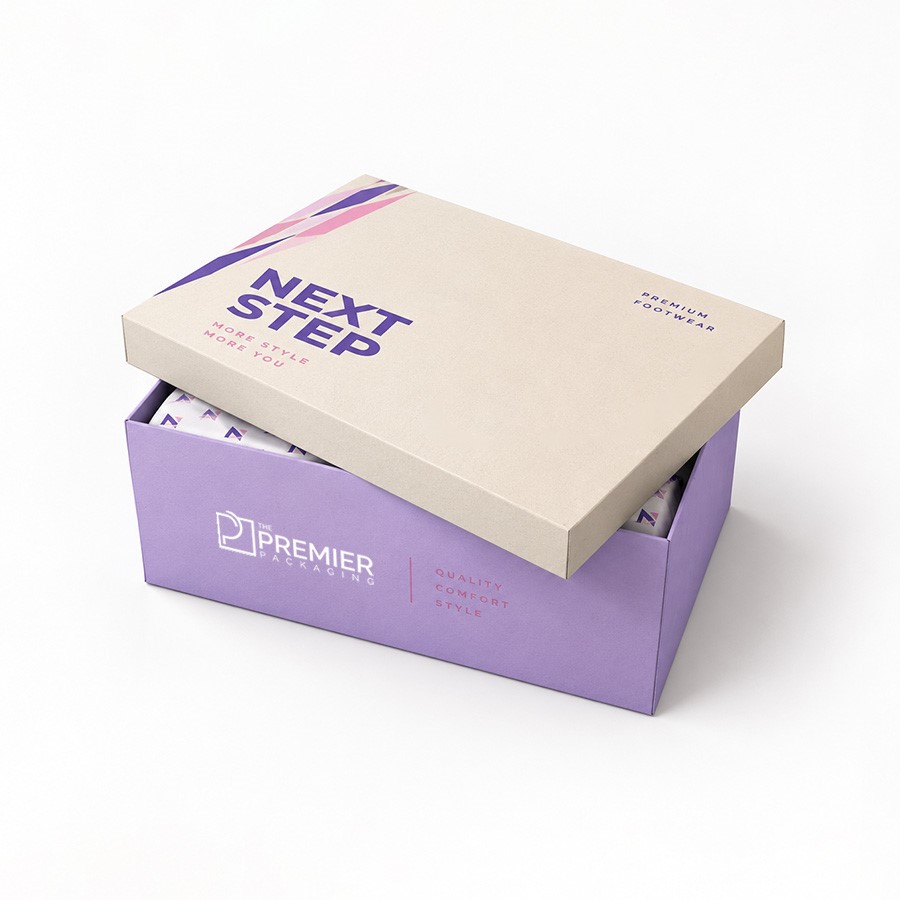
This is where custom cardboard shoe storage boxes have held their ground for so long. Cardboard breathes better than plastic, which helps keep moisture from sitting against leather. It’s lightweight, it stacks well when the board is strong enough, and it can be printed, shaped, and sized to fit nearly any footwear style.
But not all cardboard is equal. A thin, single-layer box is fine for a quick trip home from the shop. It’s not what you want for long-term storage or for shipping a pair across the country. Corrugated board, with its fluted middle layer, handles weight and impact far better, and that’s usually what separates a box that protects from one that just contains.
Matching the Box to the Shoe
Different footwear puts different demands on packaging. A quick comparison:
| Footwear Type | Main Risk | What the Box Should Offer |
| Sneakers/trainers | Toe box dents, upper creasing | Snug fit, tissue support at the front |
| Leather dress shoes | Vamp creases, scuffing | Rigid walls, soft interior wrap |
| Boots | Shaft collapse, folding at the ankle | Extra height, internal shaft support |
| Sandals/flats | Strap bending, sole warping | Flat, shallow structure with a divider |
| Heels | Heel stress, toe crushing | Reinforced base, separated pair |
One standard box doesn’t cover all of these well. It might hold them, sure, but holding and protecting are two different jobs.
Small Details That Make a Real Difference
- Choose board strength based on how the box will be used, not just how it looks. Storage and shipping need more than a shelf display alone.
- Get the depth right. A box that’s too shallow squashes the shoe every time the lid closes.
- Add a divider or wrap for pairs, especially with leather or suede, so the shoes don’t rub against each other.
- Think about ventilation. A box that traps moisture can do more harm than a thin one that breathes.
- Keep sizing consistent within a product line, so stacks stay stable and shelves look organized.
Brands that want to get this right usually start with the shoe itself, its length, height, and how soft or stiff the upper is, and build the box around those dimensions. That’s the approach the premier packaging takes when designing shoe boxes, working from the product outward rather than squeezing the product into whatever size is already available.
Final Words
A shoe box is easy to overlook. It’s flat, it’s brown, and most people throw it out or shove it into a closet. But it’s the thing that determines whether a pair comes out of storage looking the way it went in. Sturdy walls, a proper fit, and a bit of thoughtful padding don’t just keep shoes tidy. They keep their shape, and for anyone who’s paid good money for a pair, that’s really the whole point.