In precision manufacturing, some of the most important decisions happen before a machine begins cutting. Choosing the right tool can influence dimensional accuracy, production efficiency, component reliability, and the consistency of the finished part.
For manufacturers across the United States, these decisions are especially important when producing components used in power transmission systems. Gears must transfer motion as intended, while splined shafts and hubs must connect securely and transmit torque reliably. Both applications depend on carefully controlled geometry and suitable cutting tools.
Two tooling categories that support these requirements are worm gear hobs and involute spline cutters. Although both are associated with precision machining, they serve different purposes and require different selection criteria.
Understanding how each tool works, what influences its performance, and how to evaluate a suitable supplier can help manufacturing teams make informed decisions and build more dependable production processes.
Why Specialized Cutting Tools Matter
A finished component can look correct at first glance and still fail to meet its engineering requirements. Small errors in tooth geometry, spline dimensions, alignment, or surface condition may affect how parts fit together and perform under load.
For U.S. manufacturers serving industries such as industrial machinery, automotive equipment, material handling, and power transmission, consistent component quality is essential.
Suitable cutting tools help manufacturers work toward several important objectives:
- Dimensional accuracy: Producing features that meet engineering specifications.
- Reliable component engagement: Supporting the intended interaction between mating parts.
- Production consistency: Maintaining repeatable results across manufacturing batches.
- Efficient machining: Matching the tool and process to the component’s requirements.
- Controlled tool wear: Establishing maintenance practices that help identify wear before quality deteriorates.
The tool itself is only one part of the process. Machine capability, workpiece material, setup accuracy, cutting parameters, and inspection procedures all contribute to the final result.
Worm Gear Hobs: Tooling for Specialized Gear Manufacturing
Worm gearing is commonly used when a mechanical system requires a particular speed relationship or a compact arrangement for transmitting motion. A typical worm gear set consists of a screw-like worm that meshes with a worm wheel.
These systems appear in selected industrial gearboxes, conveying equipment, positioning mechanisms, and other mechanical drive applications.
Manufacturing worm gear components requires attention to the geometry of the mating parts. The appropriate cutting method and tool design depend on whether the operation involves the worm, the worm wheel, or another related component.
How Do Worm Gear Hobs Work?
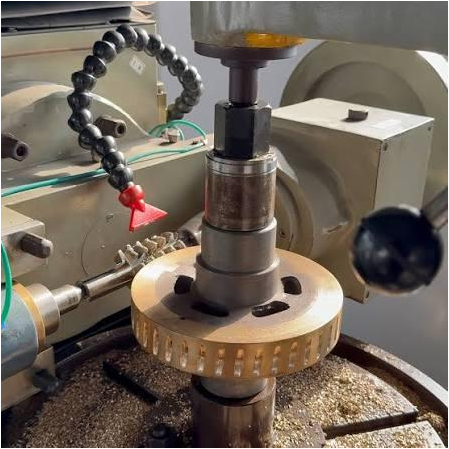
Hobbing is a machining process that uses a rotating, multi-edge cutting tool. The hob and workpiece move in a coordinated relationship, allowing the cutting edges to remove material progressively and generate the intended geometry.
For worm gear applications, the tooling must be appropriate for the component design and manufacturing method. Not every hob is suitable for every worm gear configuration.
The finished result depends on several factors:
- The geometry and specifications of the workpiece
- The design and suitability of the hob
- Machine capability and required coordinated movements
- Workpiece material and machining condition
- Tool condition, alignment, and cutting parameters
When these factors are evaluated together, manufacturers can make better-informed decisions about the appropriate tooling for their application.
What Should You Look for in a Worm Gear Hobs Supplier?
Searching for a worm gear hobs supplier is a useful starting point, but the product category alone does not establish whether a tool will meet your requirements.
Begin with the component drawing. Identify the required geometry, dimensions, tolerances, material, and intended machining process.
Next, confirm the machine specifications and any constraints that may affect tool compatibility. The supplier should have enough technical information to understand the intended application before a particular tool is selected.
It is also important to consider the information available about the tool’s dimensions and design. Clear specifications help manufacturing engineers verify suitability and reduce the risk of ordering tooling that does not match the intended component.
The objective is simple: find a tool that fits the actual manufacturing requirement rather than choosing solely by product name or purchase price.
Involute Spline Cutters: Creating Accurate Torque-Transmitting Features
Gears are not the only components that rely on carefully formed teeth. Splined shafts and hubs use a series of teeth and grooves to connect components, transmit torque, and, in some designs, allow axial movement between mating parts.
An involute spline cutter is designed for machining spline features based on an involute tooth profile. The specific cutter and machining process must match the spline’s engineering specifications.
Involute splines are widely used in mechanical assemblies because their geometry can support predictable engagement when the mating components are correctly designed and manufactured.
Why Is Involute Spline Geometry Important?
A spline connection must do more than fit together physically. Its tooth geometry, dimensions, and fit requirements influence how loads are transmitted between the shaft and the mating component.
If the spline profile or dimensions fall outside the specified requirements, the connection may experience improper engagement, excessive play, assembly difficulties, or uneven load distribution.
Selecting an appropriate cutter helps establish the intended geometry, but the final result also depends on the machining process, setup accuracy, tool condition, and inspection method.
Where Are Involute Spline Cutters Used?
Depending on the cutter design and machining method, involute spline cutters may be used to manufacture features for applications such as:
- Power transmission shafts and hubs
- Industrial drive assemblies
- Automotive and drivetrain components
- Machinery requiring torque-transmitting connections
- Specialized mechanical assemblies and replacement parts
These are general application examples, not a guarantee that one cutter design will suit every application. Spline dimensions and fit requirements can vary considerably.
Before selecting a cutter, manufacturers should confirm the spline standard or design specification, tooth count, module or applicable dimensional system, pressure angle, major and minor dimensions, and required fit. The exact information needed depends on the component drawing and manufacturing method.
What Influences Spline-Cutting Accuracy?
Several factors contribute to the quality of a finished involute spline.
Tool geometry: The cutter must match the specified spline profile and dimensions.
Machine capability: The machine must support the required cutting method and positioning accuracy.
Workpiece setup: Secure workholding and correct alignment help maintain consistent geometry.
Tool condition: Worn or damaged cutting edges can affect dimensions and surface quality.
Inspection: The finished spline must be checked against the specified requirements, including applicable dimensional and fit criteria.
A controlled approach to these factors helps manufacturers reduce avoidable variation and improve confidence in the finished connection.
Worm Gear Hobs vs. Involute Spline Cutters: Understanding the Difference
Although both tools are used in precision manufacturing, they are intended for different component geometries.
| Consideration | Worm Gear Hobs | Involute Spline Cutters |
| Primary purpose | Supporting suitable worm gear manufacturing operations | Producing specified involute spline features |
| Typical component | Worm gear-related components | Splined shafts, hubs, and related parts |
| Main selection factors | Component geometry, hob design, machine compatibility | Spline profile, dimensions, fit requirements, and machining method |
| Key process considerations | Tool geometry, coordinated motion where required, setup | Cutter profile, alignment, indexing or positioning, and inspection |
| Quality objective | Achieve the intended worm gear geometry | Achieve the specified spline geometry and fit |
The key distinction is the feature being manufactured. A worm gear hob should not be treated as a substitute for an involute spline cutter, or vice versa, simply because both tools involve toothed geometry.
Choosing the correct category begins with understanding the component and the operation required to produce it.
Five Factors to Consider Before Selecting Either Tool
For manufacturing engineers and purchasing teams in the USA, a consistent evaluation process can help reduce sourcing errors and improve production planning.
1. Start With the Engineering Drawing
Review the component drawing before comparing tools. Identify the geometry, dimensions, tolerances, material, and any relevant standards.
For worm gearing, pay close attention to the intended gear arrangement and component geometry. For splines, verify the profile and specified fit requirements.
If important information is missing, clarify it before proceeding.
2. Match the Tool to the Workpiece Material
Material properties influence machining behavior, cutting forces, and tool wear. Hardness, machinability, and heat-treatment condition may all affect tooling decisions.
Providing accurate material information helps establish a suitable starting point for selecting the tool and defining the machining process.
3. Verify Machine Compatibility
Confirm that the available machine can accommodate the proposed tool and perform the required operation.
Consider mounting requirements, workpiece dimensions, machine rigidity, and the movements or positioning capabilities needed for the specific process.
A suitable tool cannot compensate for a machine setup that is unable to produce the required geometry.
4. Evaluate the Entire Production Requirement
Production volume can influence the most appropriate machining strategy. A prototype job and a recurring production order may have different priorities.
Compare setup time, machining time, expected tool life, inspection requirements, and overall tooling costs. The lowest purchase price does not always represent the best value over the life of a production process.
5. Plan for Inspection and Maintenance
Establish how the finished part will be verified before production begins. Depending on the component, inspection may include tooth dimensions, profile accuracy, surface condition, and mating-part fit.
Regularly inspecting the cutting tool also helps identify wear or damage before it contributes to unacceptable parts.
Common Tooling Mistakes Manufacturers Should Avoid
Even a carefully planned machining operation can encounter problems when basic requirements are overlooked.
- Selecting by name alone: A broad tool category does not guarantee compatibility with a particular design.
- Providing incomplete specifications: Missing drawing or machine information can lead to an unsuitable selection.
- Ignoring tool wear: Cutting edges can deteriorate with use and affect dimensional consistency.
- Overlooking workholding and alignment: Incorrect positioning can undermine the accuracy of the operation.
- Comparing only initial prices: Tool suitability, expected life, productivity, and inspection costs should also be considered.
Addressing these issues early can help manufacturers make more informed tooling decisions and reduce unnecessary production interruptions.
Build a More Reliable Tooling Strategy With SS Tools
Precision manufacturing depends on matching the right tool to the right component. Worm gear hobs support suitable worm gear manufacturing applications, while involute spline cutters are designed for producing specified spline profiles.
For manufacturers across the United States, the practical starting point is to gather the engineering drawing, material details, machine specifications, production requirements, and required tolerances before evaluating tooling options.
SS Tools can be a starting point for exploring gear-tooling requirements and preparing for a more focused discussion about the intended application.
Better manufacturing begins with better-informed tooling decisions. By confirming the component geometry, checking machine compatibility, and planning for consistent inspection, manufacturers can work toward dependable production and precision-engineered results.