Walk into pretty much any retail store today, and odds are decent you’ll walk out with something wrapped in Kraft paper. That wasn’t always true. For decades, kraft paper stayed in the background, useful, sure, but nobody thought of it as part of a brand. Then, sometime in the last ten years or so, things shifted. Retailers stopped treating it like a utility material and started treating it like an actual design choice. Once sustainability became a real selling point rather than a nice extra, kraft paper landed right in the middle of that shift.
A Material Nobody Really Noticed Until They Did
Kraft paper’s been around for over a century, mostly doing dull, unglamorous jobs: lining shelves, wrapping produce, holding together whatever you just bought at the hardware store. Nobody picked it because it looked good. They picked it because it’s cheap, strong, and easy to make in bulk. For most of its life, “stylish” wasn’t a word anyone would’ve used for it.
What actually changed wasn’t the paper, it was everything happening around it. Retail design moved toward simpler, quieter visuals, and at the same time, shoppers actually started caring about what their stuff came wrapped in. Kraft paper just happened to fit both trends without anyone needing to reinvent it.
Why Retailers Started Taking It Seriously
A handful of things pushed kraft paper from an afterthought to a front-of-store choice:
- Customers now expect some kind of sustainability story from brands, and kraft paper is one of the simplest ways to show that at a glance
- Minimalist branding made kraft’s plain, textured look feel deliberate instead of low-budget
- It’s flexible the same base material covers wrapping, bags, boxes, even in-store signage
- It’s still cheaper than a lot of the alternatives, even once you add custom printing
That last point gets overlooked more than it should. Plenty of “sustainable” materials cost noticeably more than conventional ones, which makes them a hard sell for smaller retailers. Kraft paper mostly sidesteps that problem; it’s often less expensive than glossy laminated packaging, not more, which removes one of the biggest hurdles retailers usually hit when trying to go greener.
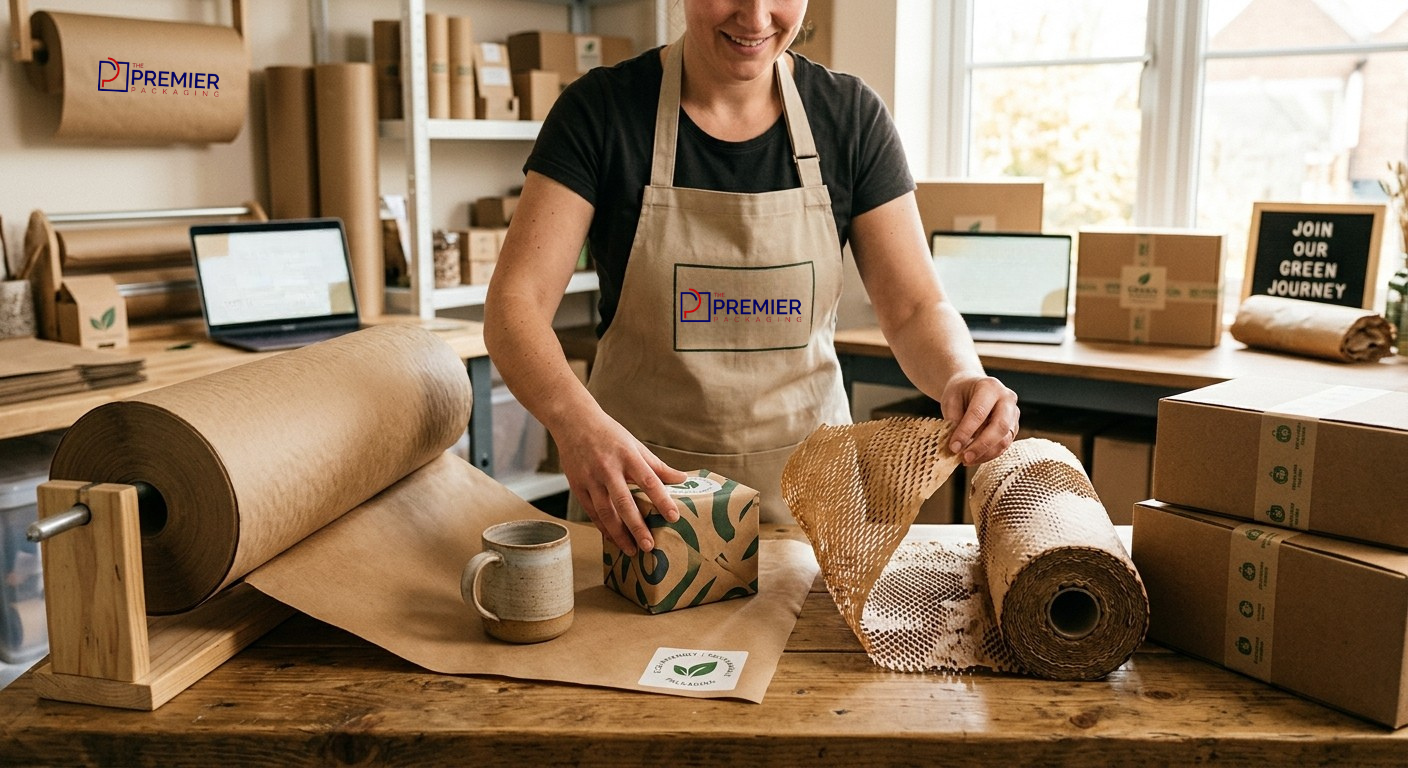
The most visible place kraft paper shows up now is probably in how products get wrapped or bagged at the point of sale. Boutique retailers use it for gift wrapping, food vendors use kraft takeaway wrapping paper to hand off orders quickly without resorting to plastic, and plenty of mid-size brands use kraft bags as their default retail bag instead of glossy printed alternatives.
Where You Actually See It Now
The most obvious place Kraft paper shows up is at the point of sale, where things get wrapped or bagged when you check out. Boutiques use it for gift wrap; food vendors use kraft takeaway wrapping to hand off orders without reaching for plastic; and many mid-size brands just use kraft bags as their default instead of anything glossy or printed.
Food service, in particular, has leaned into it hard, and not only for looks. It holds up better against grease and moisture than people assume, wraps quickly, and skips the disposal headaches that come with plastic. A bakery or sandwich shop handing you food in kraft paper isn’t just making an aesthetic call — it’s solving a real packaging problem at the same time.
Here’s roughly how kraft paper stacks up against more traditional materials by use case:
| Use Case | Kraft Paper | Plastic/Laminated Alternative |
| Food takeaway wrapping | Breathable, compostable, decent grease resistance | Cheap, but not biodegradable; traps moisture |
| Retail gift wrapping | Textured, premium feel, easy to stamp or print | Glossy, but often reads as generic |
| Shopping bags | Recyclable, sturdy enough for moderate weight | Handles heavier loads but harder to recycle |
| Product wrapping/tissue | Simple, pairs well with minimal branding | More color options, but more waste concerns |
The Sustainability Claim Mostly Checks Out
It’s fair to be skeptical of “sustainable packaging” language — a lot of it is marketing dressed up as substance. Kraft paper, though, mostly holds up when you actually look into it. It’s usually made from wood pulp through a process that generates less chemical waste than some other paper types, and depending on the finish, it’s often both recyclable and compostable. That’s more than plastic packaging can usually claim.
That said, not all kraft paper is created equal here. Bags or boxes with heavy plastic lamination or certain glossy coatings lose most of their compostability — even though they still look like plain kraft paper on the surface. Retailers who actually care about this need to pay attention to finishing, not just the base material, or they end up making claims that don’t hold up under any real scrutiny.
Customization Hasn’t Slowed Down Either
Kraft packaging used to mean plain brown paper with maybe a single stamped logo. That’s changed a lot. Full-color printing, detailed patterns, and branded designs can now go directly onto kraft stock without losing its natural, textured feel. Brands get to keep the sustainability signal and have real design freedom, something older printing methods just couldn’t offer.
A few things brands are doing with it now:
- Printing seasonal designs straight onto kraft bags instead of relying on stickers or tags
- Using different paper weights depending on the product, heavier stock for bottles or fragile items, lighter stock for soft goods
- Adding subtle embossing or foil stamping to get a higher-end look without switching materials at all
Not All Suppliers Handle It the Same Way
Not every packaging manufacturer works with kraft paper equally well, and that gap becomes obvious fast once you’re ordering at any real volume. Print quality, consistency in paper weight, and how precisely a supplier can hit specific box or bag dimensions vary more between manufacturers than most people expect.
A company like The Premier Packaging, which focuses specifically on paperboard and kraft-based packaging, tends to offer more consistency across large orders and fewer surprises in how a design actually prints. For retailers moving away from generic bags or boxes and toward something that actually feels brand-specific, working with a manufacturer who understands kraft’s quirks, how it takes ink, how it holds up under different loads, makes the whole process noticeably smoother.
Final Words
Kraft paper isn’t a trend that’s about to fade out. If anything, it’s settled into a permanent role in retail packaging somewhere between “practical necessity” and “deliberate design choice.” Retailers who treat it as just a cheaper stand-in for plastic are missing half the point. The ones getting real value out of it are using kraft paper as an actual part of how their brand shows up, not just something to check off a sustainability list.
For a material that spent most of its existence doing invisible, unglamorous work, that’s a pretty big shift. Kraft paper went from something nobody gave a second look at to something many brands now build their entire packaging identity around.