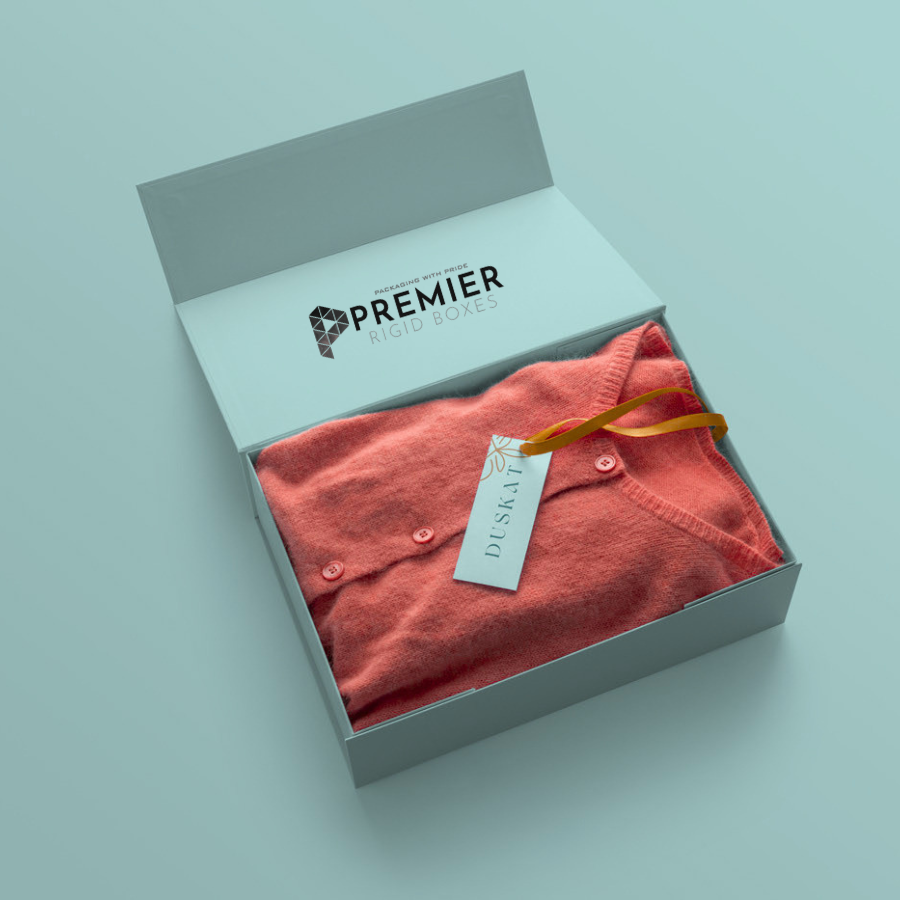
Textile packaging used to be an afterthought, a plastic sleeve here, a poly bag there, whatever got the product from warehouse to shelf without tearing. That’s changed. Walk through a home goods store or a clothing boutique now, and you’ll notice packaging that actually looks considered: sturdy boxes with clean lines, minimal branding, and no crinkly plastic that once dominated the category. A lot of that shift comes down to one unglamorous product doing more work than it gets credit for: the uncoated corrugated textile storage box.
Why Textile Packaging Needs to Change
Textiles are an odd category to package. They’re soft, they compress, they snag on rough edges, and they’re often bulky relative to their weight, think folded linens, stacked towels, or a set of curtains. For years, the default solution was plastic: shrink wrap, poly mailers, clear window boxes. It worked, technically. It also generated a lot of waste that customers were increasingly unwilling to handle.
At the same time, retail packaging in general was moving toward a simpler, more tactile aesthetic. Brands wanted boxes people would actually want to keep or reuse, not something that got torn open and tossed straight into the trash. Textile retailers had a harder time keeping up with that shift than most, mainly because plastic still does a genuinely good job of protecting fabric from moisture and dust. Corrugated cardboard had to prove it could do the same job without the drawbacks.
What Makes Uncoated Corrugated Different
Most people picture cardboard box as one generic thing, but there’s a real difference between coated and uncoated corrugated stock, and it matters more for textiles than for almost any other product category.
Coated corrugated has a laminate or wax-type finish, good for moisture resistance, harder to recycle, and it tends to look glossy or plasticky no matter what’s printed on it. Uncoated corrugated skips that layer entirely. What’s left is a raw, textured board that:
Recycles and composts without needing to strip a coating first
Takes ink and embossing more cleanly, since there’s no slick surface fighting the print
Breathes, which matters a lot for fabric trapped moisture in sealed plastic, is a bigger risk to textiles than open air ever is
Feels closer to a natural material, which fits the calmer, less-processed look a lot of home and apparel brands are going for right now
That breathability point gets underestimated. Fabric stored in plastic for long stretches can pick up a musty smell or develop mildew if there’s any residual moisture. Uncoated corrugated doesn’t have that problem, which makes it a genuinely better functional choice for textile storage not just a more sustainable-looking one.
Where These Boxes Actually Get Used
Uncoated corrugated textile storage boxes show up across a wider range of retail than people initially assume:
Home goods and linens. Bedding, towel sets, and table linens are usually folded, so they need a box that holds shape without crushing the fabric. Corrugated’s natural rigidity handles that well.
Apparel storage and shipping. Seasonal clothing, off-season storage sets, and subscription boxes for clothing brands increasingly use uncoated stock instead of poly mailers, especially for higher-end product lines where the unboxing experience matters.
Retail-ready packaging. Some brands now use these boxes as both the shipping container and the in-store display, cutting out a packaging step entirely and reducing the amount of material used per unit.
Moving and storage retailers. Companies selling home organization products have leaned into textile-specific storage boxes as a distinct product line, not just packaging customers buy them specifically to store off-season clothes or linens long-term.
That last use case is worth pointing out because it flips the usual packaging equation. Instead of packaging being a cost that retailers absorb, the box itself becomes something customers pay for directly.
The Sustainability Case, Without the Overstatement
Uncoated corrugated genuinely does better on environmental metrics than most plastic textile packaging — it’s more readily recyclable, breaks down faster if it ends up in landfill, and usually comes from a higher percentage of recycled fiber to begin with. That’s a real advantage, not just a talking point.
But it’s not automatically the greener choice in every situation. Corrugated is heavier and bulkier than plastic film, which means higher shipping weight and more cargo space per unit — both of which carry their own environmental cost. For a retailer shipping textiles internationally at high volume, that trade-off is worth actually running the numbers on rather than assuming cardboard wins by default. It usually does, but it isn’t always.
Structural Considerations Retailers Often Miss
Textiles don’t behave like rigid products, so box design can’t simply be scaled down from what works for hard goods. A few things that matter more than people expect:
Wall thickness needs to match fabric density. Heavier items, like folded blankets, need double-wall corrugated to prevent the box from bowing under weight during stacking or shipping.
Fold lines matter for reusability. If customers are meant to reuse these boxes for storage, the crease points need to withstand repeated folding without cracking.
Ventilation without vulnerability. Some brands add small perforated vents for airflow, but too many compromises structural strength this is a balance that takes actual engineering, not guesswork.
Print doesn’t always need full coverage. Because uncoated stock takes ink so cleanly, many brands are finding that minimal, single-color printing reads as more premium than a fully wrapped, heavily branded box.
Finding the Right Manufacturing Partner
This is a category where the manufacturer’s influence on the outcome outweighs the raw material specs. Two suppliers can both claim uncoated corrugated, and the actual board weight, flute profile, and print consistency can vary enough to affect how the box performs in practice especially for anything reused for long-term storage rather than tossed after one use.
Retailers moving into this space are generally better off working with a manufacturer with specific experience in textile packaging rather than a generalist box supplier. The engineering considerations fold durability, weight distribution, and how the board handles repeated compression from folded fabric aren’t things every corrugated supplier has actually solved for.
Final Words
Textile packaging is catching up to where food and beauty packaging already are — treated as part of the product experience instead of an afterthought bolted on at the end. Uncoated corrugated boxes are a big part of that shift because they solve a functional problem (protecting fabric without trapping moisture) while also addressing a branding one (looking intentional rather than purely utilitarian).
The retailers getting the most out of this aren’t just swapping plastic for cardboard and calling it done. They’re treating the box as something customers might actually keep using — which, for a textile storage box specifically, is often exactly the point.