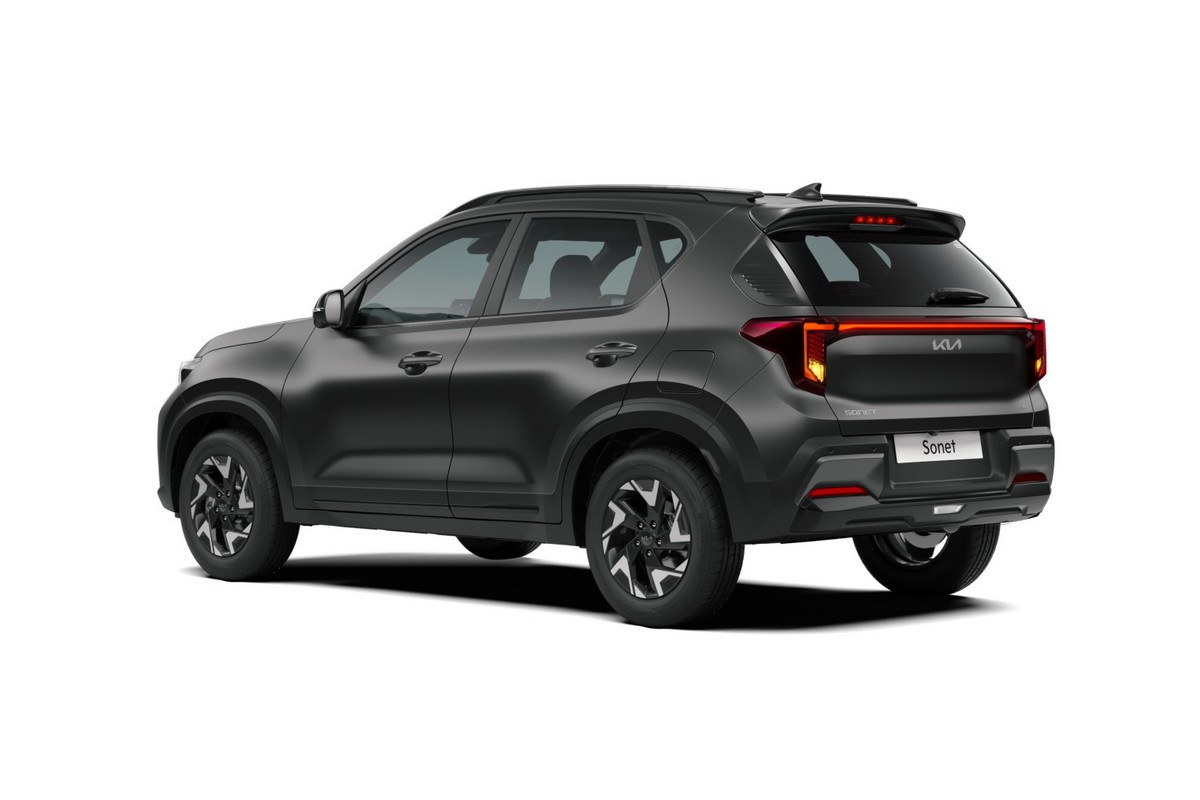
Buyers can choose among naturally aspirated petrol, turbo-petrol and diesel powertrains, with manual and automatic options spread across trims. That breadth is useful, but it can also make the price ladder confusing. The simplest way to shop is to decide your engine first, then pay only for features you will use.
Sonet prices at a glance
| Variant | Indicative ex-showroom price |
| HTE | Rs. 7.41 lakh |
| HTE(O) | Rs. 7.84 lakh |
| HTK(O) | Rs. 8.85 lakh |
| HTK+ | Rs. 9.24 lakh |
| HTX | Rs. 11.51 lakh |
| GTX+ | Rs. 13.66 lakh |
| X-Line | Rs. 13.80 lakh |
Sonet dimensions and engines
| Specification | Sonet reference |
| Length | 3995 mm |
| Width | 1790 mm |
| Wheelbase | 2500 mm |
| Boot space | 385 litre |
| 1.2 petrol | 61 kW, 115 Nm |
| 1.0 turbo-petrol | 88 kW, 172 Nm |
| 1.5 diesel | 85 kW, 250 Nm |
How the Sonet price ladder is structured
The Sonet range starts around the mid-Rs. 7 lakh level and rises into the high-Rs. 13 lakh band before registration and insurance. The increase is not just cosmetic. Higher trims bring larger displays, ventilated seats, connected features, cameras and advanced driver-assistance equipment on selected versions. Engine and gearbox choice can also move the price sharply, especially when comparing the 1.2 petrol with turbo-petrol or diesel automatics.
Also compare the actual tyre and spare-wheel setup, service plan and insurance premium. These items rarely influence the brochure headline, yet they affect what the vehicle costs and how convenient it is to own. The Kia Sonet price sits in a price-sensitive part of the compact-SUV market, so the right variant matters almost as much as the model itself.
Which Sonet engine suits your use
For mostly city driving and moderate annual distance, the 1.2-litre petrol keeps the mechanical package simple. Buyers who want stronger acceleration can look at the 1.0-litre turbo-petrol, while the 1.5-litre diesel offers notably higher torque for frequent highway use or heavier running. Do not pick diesel only for fuel economy; compare annual kilometres, local fuel prices and your expected ownership period.
Read specifications through everyday needs
The kia sonet specification is 3995 mm long, which keeps it within the sub-four-metre compact-SUV class. A 2500 mm wheelbase and 385-litre boot make it practical for small families, although rear-seat comfort should still be checked in person. The specification sheet matters most when it answers a real question: will your luggage fit, can elderly passengers enter comfortably, and does the gearbox feel smooth in your traffic conditions?
What to check before booking
Ask for the exact ex-showroom price of the chosen engine-transmission-trim combination, not merely the model’s advertised starting figure. Then separate registration, insurance, accessories and extended warranty. Compare waiting period and manufacturing month as well. A slightly cheaper variant that lacks an important safety or convenience feature may be poor value, but paying for equipment you rarely use is equally wasteful.
Where mid variants can make the strongest case
For many Sonet buyers, the middle of the range deserves closer attention than either extreme. Mid variants can combine the desired engine with useful equipment such as a touchscreen, rear camera, automatic climate features or a sunroof without pushing the price into the top-end band. Compare feature additions one step at a time. If an upgrade gives you two or three items you will use weekly, it may be worthwhile; if it mainly changes trim and appearance, keep the money.
Automatic buyers should compare gearbox behaviour
The Sonet offers several transmission types across its engine range, so ‘automatic’ is not one experience. A torque-converter diesel automatic, a dual-clutch turbo-petrol and an intelligent manual transmission behave differently in crawling traffic, quick overtakes and parking. Drive the exact combination you intend to purchase. Smoothness and response can matter more over years of ownership than a small difference in claimed efficiency.
Work from the final invoice backwards
After you shortlist a trim, ask for the ex-showroom amount, registration, insurance and optional items on separate lines. Remove accessories you do not need and compare an outside insurance quote with equivalent coverage. If financing the car, calculate EMI on the final funded amount rather than on a round estimate. This keeps the Sonet within a budget you understand instead of one built around a showroom monthly-payment pitch.
A sensible Sonet booking sequence
Shortlist the engine and gearbox first, then pick the lowest trim that includes your essential safety and comfort features. Ask for a written quotation with the variant code, ex-showroom amount, registration, insurance and accessories separated. Compare at least one equivalent insurance policy outside the dealership, and check the manufacturing month of the allocated vehicle. If you are borrowing, calculate the EMI only after these numbers are final. This sequence keeps the purchase focused on the car you want rather than on a monthly-payment pitch, and it makes it easier to spot where the final Sonet bill has moved away from the advertised starting price.
Conclusion
The Sonet offers enough engine and trim combinations to fit very different buyers. The smart approach is to choose the powertrain first, identify the minimum features you need and then compare exact ex-showroom prices. That keeps the Kia Sonet price discussion tied to real value instead of brochure temptation.