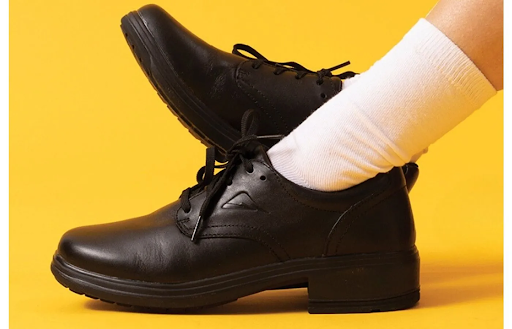
School shoes face demanding daily use, often for several hours at a time. Walking between classrooms, running during breaks, standing in school assemblies, climbing stairs, and playing on different surfaces can place constant pressure on footwear. As a result, school shoes may develop worn soles, damaged stitching, creases, scuffed toes, or loose fasteners sooner than expected. The quality of materials, shoe fit, walking habits, cleaning methods, and storage conditions can all affect durability. Understanding the common causes of damage makes it easier to protect school footwear, maintain comfort, and extend the useful life of a pair without compromising daily support.
Why School Shoes Wear Out Quickly
Several factors contribute to the short lifespan of school footwear. Daily school activities create repeated friction and pressure, while unsuitable care can speed up material deterioration.
- Daily movement: Frequent walking creates constant pressure on the soles and upper material.
- Hard surfaces: Concrete, tiles, and other firm surfaces increase friction against the outsole.
- Running and playing: Sudden movements can bend, twist, and stretch shoes beyond normal walking conditions.
- Poor fit: Shoes that are too tight can develop excessive creasing, while oversized footwear may experience unnecessary movement.
- Low-quality materials: Thin synthetic uppers, weak stitching, and soft outsoles can deteriorate quickly.
- Moisture exposure: Sweat, rain, and damp storage can weaken materials and encourage unpleasant odors.
Common Signs of Worn School Shoes
Early signs of damage can often be noticed before footwear becomes unusable. Regular inspection helps identify problems while simple care or minor repairs may still be possible.
- Deep cracks around the toe area
- Smooth or unevenly worn outsole patterns
- Loose stitching around the sides
- Separation between the sole and upper
- Broken laces, buckles, or hook-and-loop fasteners
- Flattened or damaged insoles
- Persistent moisture or odor inside the shoes
Uneven sole wear can also provide useful information about walking patterns. Heavy wear on one side may indicate repeated pressure in a particular area, making correct sizing and comfortable construction especially important.
The Importance of Proper Shoe Size
Correct sizing is one of the most important factors affecting school shoe durability. Footwear that is too small places extra pressure on the toe box and side panels. Constant stretching can weaken seams and cause the upper material to crack. Oversized shoes can create excessive foot movement, resulting in friction around the heel and additional stress on the sole.
A suitable pair should provide enough room for natural toe movement without allowing the heel to slip excessively. Measurements can vary between brands and designs, so checking the actual fit rather than relying only on a previous shoe size is useful.
How Daily Activities Affect Shoe Durability
School footwear experiences more than ordinary walking. Sports activities, playground games, stair climbing, and long periods of standing can all increase wear.
Running puts greater force on the outsole, while repeated bending affects the front section of the shoe. Dragging feet can also create rapid abrasion around the toe and heel. Activities performed in unsuitable footwear can therefore shorten the lifespan of even well-made shoes.
A practical approach involves using appropriate sports footwear for physical activities whenever school rules allow it. Keeping formal school shoes mainly for classroom and school-uniform use can significantly reduce unnecessary stress.
Cleaning School Shoes Correctly
Cleaning helps preserve both appearance and material quality, but harsh cleaning methods can cause additional damage.
- Remove loose dirt with a soft brush or dry cloth.
- Use a suitable cleaner according to the shoe material.
- Avoid soaking leather or synthetic footwear unnecessarily.
- Allow damp shoes to dry naturally in a well-ventilated area.
- Avoid placing shoes directly against strong heat sources.
- Clean mud before it becomes difficult to remove.
- Keep soles free from accumulated dirt and small stones.
Excessive water can affect adhesives, leather finishes, and internal materials. Gentle cleaning at regular intervals is generally safer than aggressive scrubbing after heavy buildup.
Why Drying and Storage Matter
Moisture is a common reason footwear deteriorates faster than expected. Shoes worn throughout the day can collect sweat inside, while rain can leave the outer material damp. Putting damp footwear immediately into a closed cupboard traps moisture and slows drying.
Shoes should be allowed to air out before storage. A dry, ventilated location helps reduce moisture-related damage and unpleasant odors. Newspaper or suitable shoe inserts can help absorb moisture, although direct heat should be avoided because excessive heat may affect adhesives and deform certain materials.
The Role of Shoe Rotation
Wearing the same pair every school day gives little opportunity for materials to recover and dry properly. Rotating between two suitable pairs can reduce continuous stress on one pair.
A rotation system also provides time for shoes to air out between uses. This can be particularly useful during warmer weather when perspiration is higher. Alternating footwear does not eliminate normal wear, but it can distribute daily use across multiple pairs and potentially extend the service life of each pair.
Simple Habits That Reduce Wear
Small changes in daily footwear habits can prevent avoidable damage.
- Use a shoehorn when putting on structured shoes.
- Untie laces before removing lace-up footwear.
- Fasten straps or buckles correctly rather than forcing the foot inside.
- Avoid dragging heels across the ground.
- Keep school shoes away from muddy or excessively wet areas when possible.
- Store shoes with enough ventilation.
- Inspect soles and stitching regularly.
- Address minor damage before it becomes a larger problem.
Pulling shoes off without loosening the fastening system can crush the heel counter and gradually weaken the back of the shoe. Similarly, stepping on the heel can deform the structure and reduce proper foot support.
Material Quality and Construction
The materials used in school shoes have a major effect on durability. Leather can offer good flexibility and durability when properly maintained, while quality synthetic materials can provide easy cleaning and resistance to everyday scuffs. The outsole should have suitable thickness and traction for regular school surfaces.
Construction also matters. Strong stitching, properly bonded soles, reinforced toe areas, and secure fastening systems can help footwear withstand repeated daily movement. A shoe should not be judged only by appearance because internal construction and material quality can have a greater effect on long-term performance.
When School Shoes Need Replacement
Even careful maintenance cannot prevent footwear from eventually reaching the end of its useful life. Replacement becomes important when the outsole has lost significant traction, the sole is separating, structural support has deteriorated, or the upper material has developed major cracks.
A worn pair can become uncomfortable and may provide less stability during walking. Continuing to use damaged footwear simply to extend its lifespan can therefore be counterproductive. Regular checks make it easier to identify the right time for replacement rather than waiting until serious damage occurs.
A Practical School Shoe Care Routine
A simple routine can make daily maintenance easier:
- Daily: Remove visible dirt and place footwear in a ventilated area.
- Weekly: Check stitching, soles, fasteners, and the inside of each shoe.
- After rain: Dry footwear naturally before storage.
- Monthly: Check for uneven outsole wear and material cracks.
- When damage appears: Repair minor problems early where practical.
- Throughout the year: Recheck sizing as foot growth changes.
Consistent care generally requires only a few minutes but can help preserve appearance, comfort, and structural condition.
Why Bachaa Party Can Help With School Footwear Needs
Bachaa Party offers a convenient place to explore children’s footwear and other school essentials in one shopping environment. A broad range of children’s products can make it easier to consider different styles, sizes, and everyday requirements as children grow. For school footwear, attention to correct sizing, comfort, construction, and intended daily use remains important regardless of where a purchase is made. Bachaa Party can be considered when looking for practical options for school preparation, helping simplify the process of arranging footwear and other children’s essentials while keeping changing school and seasonal needs in mind.